
20+ Years of VTScada Success
VTScada has helped the City of Durham modernize wastewater monitoring while maximizing the value of its existing infrastructure.
Results
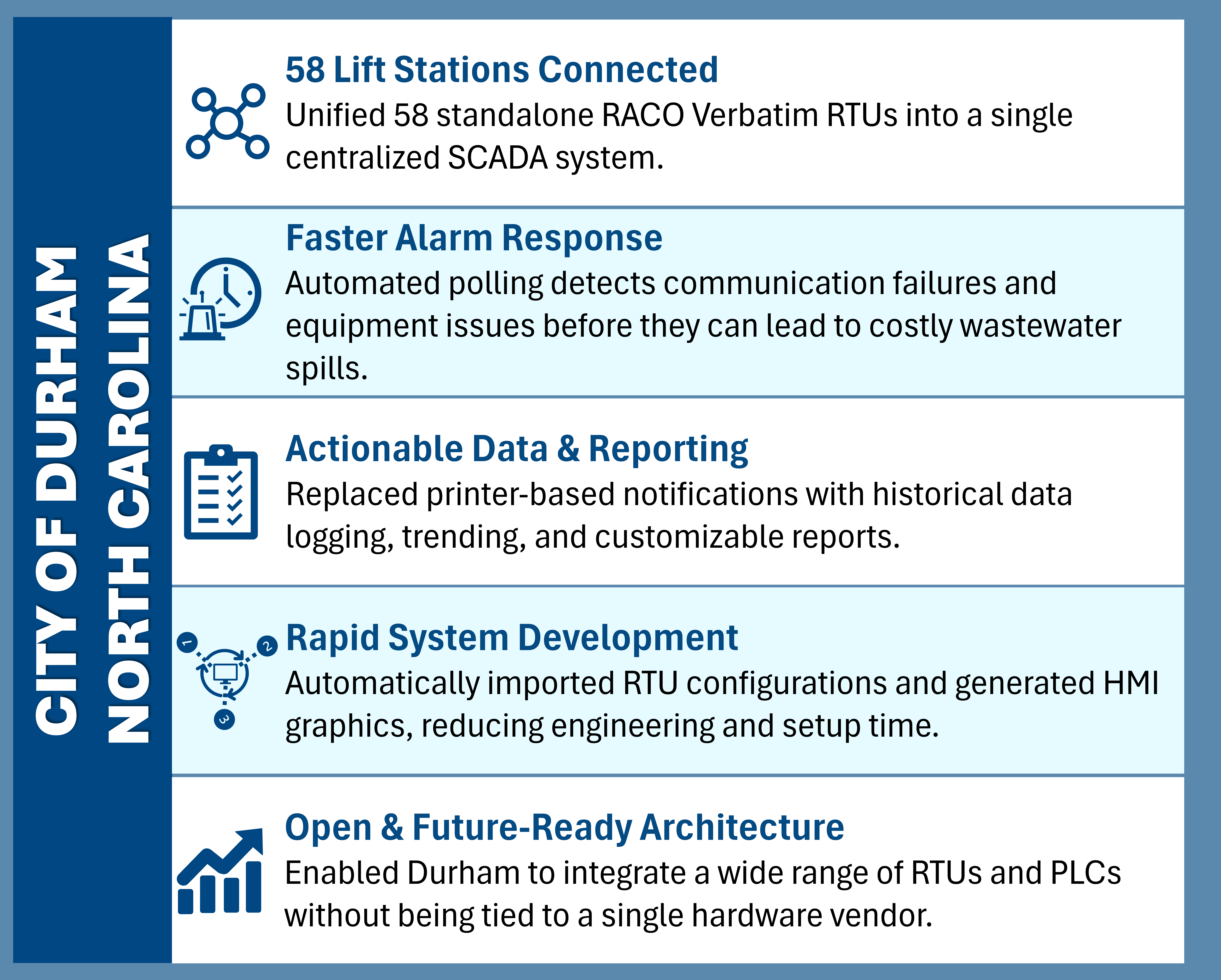
- Improved operational visibility
- Better response times
- Reduced risk of spills
- Easier reporting and maintenance
- A scalable SCADA platform trusted for over two decades
From the Archives!
A Quick & Easy SCADA Central for Raco Autodialers
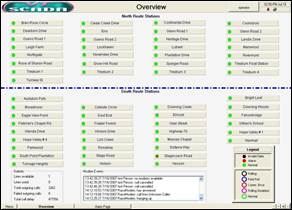
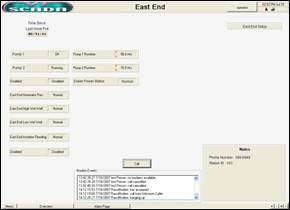
The City of Durham needed a full SCADA central to unite the RACO Verbatim™ RTUs monitoring their lift stations. However, at that time, not even RACO offered drivers that allowed the Verbatim to communicate with SCADA systems. At a seminar, Durham electronic technician Newman Gunter learned that Trihedral Engineering Ltd. had created such a driver for its VTScada product. Not only could it send and receive I/O data to RACO RTUs, it could also upload and download the unit’s configuration settings, using this information to automatically generate I/O tables and graphics screens in VTScada. With this driver and VTScada, Gunter was able to develop a SCADA central HMI to consolidate the City’s RTUs in an efficient and error-free manner. Finally, by choosing a SCADA software product with an extensive library of device drivers, the city was free to expand its SCADA system to include almost any commonly available RTUs or PLCs.
Durham, North Carolina
For many, the City of Durham North Carolina is famous for the Durham Bulls, the professional baseball team depicted in the movie Bull Durham. With roughly 210,000 residents, Durham is also the home of Duke University, and is one of three cities that make up the ‘The Research Triangle’, an area rich with high-tech industry and business in North Carolina. Durham’s wastewater infrastructure included fifty-eight lift stations, each monitored by an independent RACO Verbatim Remote Telemetry Unit (RTU). These reliable stand-alone devices monitored such things as on/off indications, high & low water levels, power supply phase loss and generator run times. In the event of an alarm, the integrated alarm dialer called into a modem that was connected directly to a dot matrix printer that printed the status of the dialer. Under normal conditions, the dialers called in every twenty-four hours to print their information.
Problems
- Since RTUs only output to a printer, there was no way to run reports on historical data or analyze long term trends.
- The system could not notify staff in the event of an RTU failure or loss of connection. Several of these ‘blind spots’ lasted for days and contributed to costly spills.
A Centralized Solution
Newman Gunter is an Electronic Technician for the city of Durham. In 2006 it became his responsibility to implement SCADA central HMI to unify these autonomous devices and address the above issues.
Priorities for the New SCADA System
- Ability to communicate with RACO Verbatim RTUs; devices designed to operate independently
- Ability to poll RTUs at regular intervals to check operational status
- Simple enough to create and configure that development cost would not be prohibitive
- Complete set of reporting & trending tools for meaningful analysis of run-time and historical data
- Ability to incorporate other brands of RTUs & alarm dialers that the city may add in the future
Driver Wanted
The first priority turned out to be the most difficult. At that time, the only driver available for the Verbatim was the Central Data Logging (CDL) driver that connected each RTU to the modem in the maintenance shop. “I didn’t know of any other products with RACO Verbatim drivers. It’s a very specialized device.” Gunter found his answer almost accidentally. “I was at an instrumentation seminar where Larry Wasserman, a local rep was giving a presentation. He mentioned that Trihedral Engineering was capable of communicating with the RACO dialers.” The previous year, Trihedral had created its own RACO driver for its VTScada HMI software.
‘Open’ Concept
Thanks to an extensive library of such device drivers, VTScada also satisfied another priority. “We knew that RACO had been working on releasing a Windows version of their software,” says Gunter. “We decided to try VTScada because if we wanted to change dialers we would not be limited to RACO. With the RACO software we would have to continue using only RACO dialers.” By using VTScada, the city would also be free to add almost any RTU or PLC on the market.
Polling Capabilities
VTScada actually extended the capabilities of the Verbatim RTUs. By regularly polling each Verbatim RTU, the VTScada central is able to:
- collect runtime data
- upload configuration data (alarm setpoints, priorities, phone numbers, I/O info)
- download configuration data
- test remote connections and trigger alarms if the connection is lost
This ability to test the connections was another priority for Gunter. “If a phone line is cut or a battery goes dead upon loss of power it may go undetected for twenty-four hours or maybe more over the weekend or a holiday. If this happens and then an alarm occurs, we may not find out before a spill happens.”
Instant Display Screens
By downloading configuration data from the RTUs, VTScada is able to save significant time and money when creating and configuring new SCADA applications. Graphic displays that include all the analog & digital inputs for each RTU can be generated automatically based on the list of I/O collected during the download process.
Reporting & Trending
VTScada also includes industry-specific reports and automatic historical data logging. Such reports reduce the time required to complete daily activities and help identify infrastructure problems.
Preparation
Before he began developing the new application, Gunter took the time to learn the features of VTScada’s drag-and-drop tool set. “Trihedral Engineering has a VTScada tutorial and I just started building that. By walking through the steps of the tutorial I learned how to do things like create new tags and draw them on the screen.” By the time he finished, he had created a complete working VTScada application.
The Development Process
With this experience under his belt, Gunter could now hit the ground running. Trihedral provided Gunter with a sample application that contained a single driver tag. “We just started building on that. We started in October and it took about three months to complete.” During this time Gunter was able to continue performing his usual duties. “It was spread out. It wasn’t all at once.”
Support
Gunter was by no means alone as he developed the new VTScada application. “I worked with Doug Spurell at Trihedral quite a bit,” says Gunter, “He was always good to work with and helped me out on anything I ran into.” As with all new applications there were hurdles to overcome. Trihedral staff worked closely with Gunter to ensure that these issues were resolved in a timely fashion. “We needed to add a few things to the RACO driver to make it a bit more specific to the individual signals we had at each of our lift stations. Each one was a little different. For example, one had a bar screen alarm that wasn’t originally in the driver. [Trihedral President] Glenn Wadden worked with us on getting these things added.” says Gunter.
The Finished System
The city of Durham now has a SCADA central that unites their fifty-eight Verbatim RTUs and addresses all of their priorities. “It works well. The feedback I’m getting is definitely good.” As Gunter describes it, “The new system calls each dialer in the same order at an adjustable time (currently every 6 hours) if a dialer does not answer for any reason VTScada sounds an alarm which gives us a better response time and helps to avoid costly spills.” During this polling process VTScada is able to draw more information from the RTUs than was previously possible, adding value to their existing hardware investment and saving development time.
The integrated report generator allows staff to interpret historical data with far greater ease and flexibility. “We can print out a report on only one station at a time versus every event that has ever occurred. That makes things a lot nicer to work with.” Reports can be saved and run as needed or on a scheduled basis.
Finally, the city is free to add new monitoring hardware based on need and merit, not on whether or not it is compatible with their SCADA system. “It was nice to be able to take this software and really make something happen. The improved system gives you more information in an easier way.”